Contact Us

Use the form on the right to contact us.

We respond to most emails within 24 hours.  

9642 Randle Rd
Williamsport, OH, 43164

Honeyrun Farm produces pure raw, honey, handcrafted soap, and beeswax candles in Williamsport, Ohio

Blog

Etsy Craft Series - A Collaboration with Whole Foods, Upper Arlington

Honeyrun Farm

-posted by Jayne 

This week on Wednesday I participated in "Create" - a craft series offered by Whole Foods in Columbus, featuring local Etsy artisans teaching a variety of craft classes.  I taught a class on making infused honey and beeswax lip balms.  It was a lot of fun, and of course Whole Foods made the whole experience inviting and casual.... great snacks and a welcoming atmosphere.  
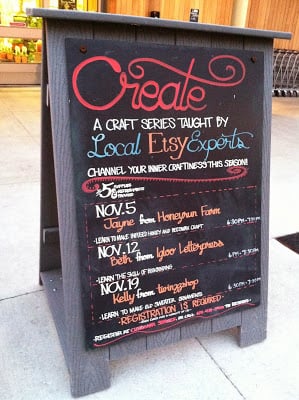
As you can see there are two more classes open
for registration.

We used a very simple recipe from the book I co-authored, Honey Crafting.

Basic Lip Balm Recipe:
.75 oz beeswax
1.5 oz apricot kernel oil (you can use other oils such as almond, coconut, sunflower, or grapeseed oil)
.10 oz essential oil or flavor oil

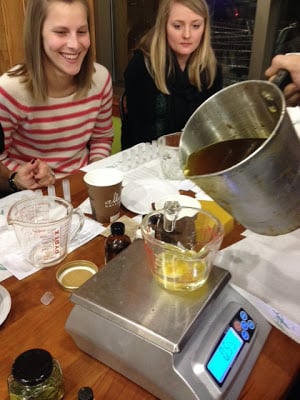
I changed the method from the book just a bit, since I wanted each participant to make and pour their own batch.  Instead of warming the beeswax and oil together in a double boiler, we just warmed the beeswax in a double boiler, combined it with the oil in pyrex measuring cups, and then re-warmed it just enough to melt them completely in the microwave. Each participant added their own choice of essential oils, poured it into lip balm tubes, and they were ready to go!  
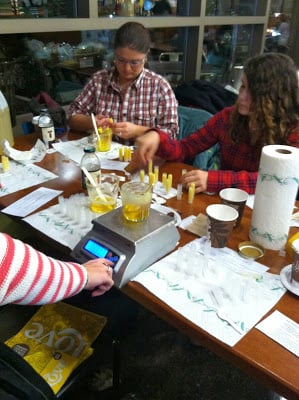
Class participant and fellow Etsy Team Columbus member
 Kellie Gedert and her daughter Cassie work on filling their lip balm tubes.

Carefully pouring hot beeswax in to oils

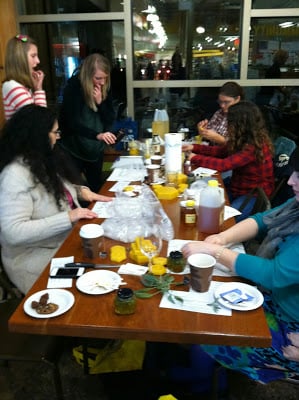
Half the class worked on creating infused honey
while the other half worked on their lip balm.  


To create the infused honey, we used a variety of fresh and dried herbs, chopped them to bits, combined with any dried spices they desired, and mixed it with honey.  I instructed them to stir the mixture several times over the next few weeks, strain out the herbs, and enjoy!  They simply need to steep until the desired flavor is achieved.  Herbs and spices we worked with included:  Dried Lavender, Dried Lemon Verbena, Fresh Thyme, Fresh Rosemary, Fresh Sage, Spearmint, Cinnamon, Dried Ginger, Cloves, and Nutmeg.
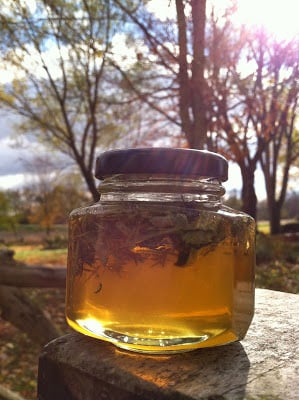
My own honey infusion, with thyme, rosemary, and sage.
I like to use a mixture like this in homemade pizza dough
or as a glaze for chicken or ham.
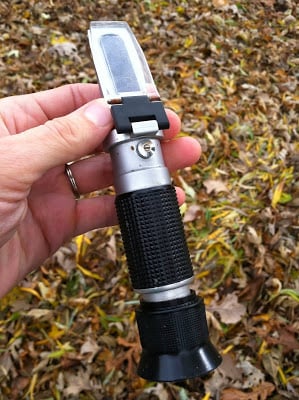
I also showed the group our Refractometer which measures the moisture level of honey.  It is important when making your own infused honey not to add ingredients that have too much moisture (fresh fruit for example).  When the moisture content of honey goes over 18.5% it can actually ferment.  Storing this type of honey blend in the refrigerator is fine, but it will not be shelf stable like traditional honey.


A refractometer used to determine
 the moisture content of honey

To use the refractometer we drip a bit of honey on the top part underneath the glass.  The bottom part operates similar to a microscope, except you look through the refractometer towards the light, and it shows the moisture content (or the index of refraction... to be scientific).

You don't need a refractometer to make infused honey at home, just be aware that adding too much moisture can cause fermentation of the honey.  Choose your herbs and infusions wisely!  Isaac and I used to make huckleberry honey when we lived in Montana and although it was delicious, it definitely needed to be stored in the refrigerator.

You can catch us at both the North Market and the Worthington Farmer's Market this weekend.  I plan to bring an abundance of fresh rosemary that is growing in our hoop house, so if you'd like to try making your own rosemary infused honey, here is your chance!

Buckwheat!

Honeyrun Farm

-Posted by Isaac

This summer we conducted a grand experiment in trying to produce buckwheat honey.

Actually, we've been fooling around with buckwheat for three years now, little half-arce plots on my sister's produce farm and experiments in the garden.
We knew that buckwheat grows fast, four weeks to bloom, and we knew that the bees love it.

Although we've had many buckwheat requests over the years, we just didn't know if it would be worth it to try and produce the black, rich, bold honey.
This year the opportunity presented itself. My brother Justin, the progressive grain farmer, had twenty acres of rye growing as a cover crop. He planned on harvesting it for seed in July then planting something else to go into winter. Buckwheat didn't exactly fit the bill, but Justin is a good guy and through my brotherly persuasion we got the buckwheat idea rolling.
While waiting for the July planting, we decided to do another garden plot: 

"The throw-down" -- Bridger's seeding technique.

This small area isn't exactly enough to make a honey crop, but it's fun to watch the bees on the buckwheat.
Plus we're somewhat lazy gardeners and cover cropping most of the garden with a thick legume meant minimal weeding during the dog days of August.
(Why sweat over onions and tomatoes when good ol' Sis at Dangling Carrot grows six acres of produce just a mile away!)

Raking in the seed meant a speedier germination.
Planting


Week  Two / Three

Week Four / Five
The garden plot was fully bloomed by the time the rye finally came off Justin's field.
We were ready to plant some real acreage.
900 lbs of seed -- a lot of buckwheat

The seeds, up-close
It's unusual to see a planter out of the barn in late July. 
As I said, Justin is a progressive farmer.
Work faster! 

Mason wants a shot at planting.

This picture was taken about four weeks after planting. The field got whiter and more beautiful as the days went on. We had a few questions from our neighbors... buckwheat isn't a normal thing around here.
You can see one group of hives in the distance. I had 31 total to forage on the field.

During the buckwheat growth, I was busy with summer honey. After a few bee yards had been pulled and extracted, this spot (only a mile from home) was convenient for cleaning out wet supers. I've learned the hard way-- when wet sticky supers are left in piles around the honey house, you attract a lot of craziness.

Here's a video shot during one of these clean-outs:


In September I got around to pulling the buckwheat honey. I was a little disappointed with the quantity, but not all with the quality:

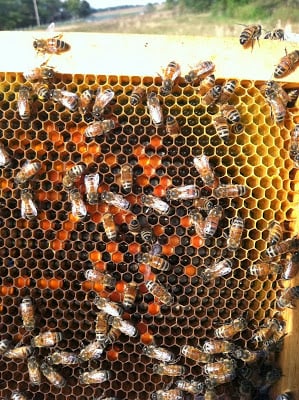
Rich, thick and black as ink. The above picture is interesting. Even though the honey is black, newly drawn wax is still bright yellow.


It has a very robust, smokey taste. It's darker than even the tulip poplar honey. I'm proud of it, I have to say. Jayne thinks it has a sweeter aftertaste than most buckwheat honeys because the goldenrod came into bloom while the supers were still on. The bees spent the mornings on the buckwheat and the afternoons making regular fall honey, mixing the two. They also brought in an abundance of beautiful orange goldenrod pollen. Twelve of the hives had pollen traps... we were double-dipping.

Come on out to a market and try it!

I'll still be at the North Market through November and Jayne starts the Worthington Winter Market this week. This year we're at Worthington every weekend.

Wonders of Fall on the Honey Farm

Honeyrun Farm

-posted by Jayne

Wonders of fall, while growing up on a honey farm:

The wooly worm wiggling through the leaves

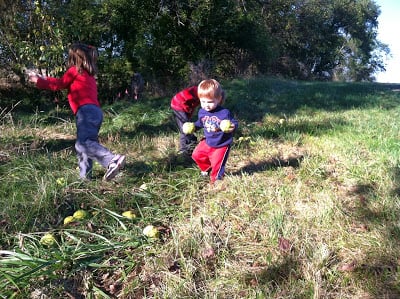
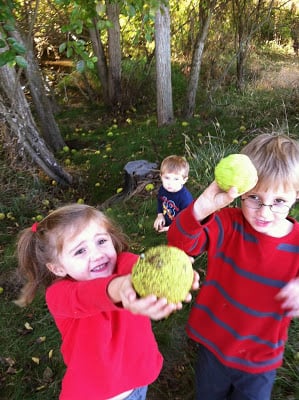
Osage Orange "Balls" -perfect for gathering, throwing in the stream,
and keeping the spiders away (as the old wives' tale goes)


"Look, they're everywhere!!  Where do they come from?"
"Look, up, Maizy... where do you think?"
"Oh!!"

Endless trips to the bridge to throw the Osage Orange overboard
"Look, mine's floating!"

Fall sun in the sandbox.

Learning to build bee boxes with daddy.

Mason gracefully took his turn and learned how
 important it is to keep the fingers away.  Ouch!

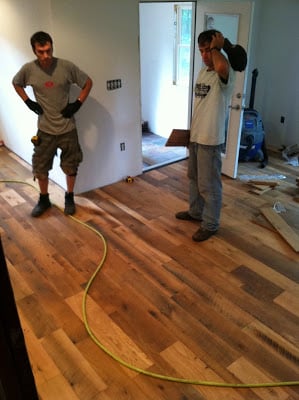
Uncle Perry installs a new slate floor in the mud-room addition.


100 year old kitchen floors...

... become new floors out of reclaimed 100 year old
oak barn wood.

A first place prize for art work in the pre-school section
at the Pumpkin Show!

The sun on the honeysticks at market.
The re-growth of buckwheat after the first harvest went
to seed and was tilled under for cover crop.  Sorry, bees,
it will likely not bloom before the frost.

This is just a little glimpse in to our lives these past few busy weeks at Honeyrun Farm.  We will give you more details on our projects soon...  including our kitchen remodel, some new projects planned for late Fall and the upcoming gift-giving season, and last but not least.... Buckwheat Honey!   We will have it at market next weekend!  One more outdoor Worthington market until we head indoors to the Shops at Worthington Mall for the Winter Market.  Enjoy those crisp Fall days ahead.

Fall's A Comin'

Honeyrun Farm

-Posted by Isaac

A few days ago to celebrate life in general and the government shut-down in particular, the kids and I decided to go for an evening romp around Deer Creek State Park.
Lo and behold this is what we found:
 I thought it was a state park?

Oh well, no playground. But we certainly were not going to let a road block stop us from fun.
It was a warm evening and Deer Creek is a big lake.
Fences only go so far...

It was time for a clothes-on impromptu swim.
"This way guys!"
 Last sand castle of the year?

Now the days have gotten crisp. The Fall honey awaits.
This afternoon Maizy helped me light up the smoker, banana in hand. She's a pro. I've yet to master banana-smoker multitasking.

I made it out to the hives on Crown Hill Golf Course. What a wealth of goldenrod honey! Ten years ago I used to receive a paycheck from Crown Hill.
I guess I still do... indirectly.

So we'll have this year's Fall honey at the market this weekend. Or at the very least a mix of the two. A trade secret for the beautiful lady who walked away last week wanting this year's Fall honey, "not that old stuff.": (They taste the same.)

I'm thinking October is my favorite month of the year.

At least until April rolls around.

And Bridger Helped

Honeyrun Farm

 -Posted by Isaac

Mason and Maizy both get on the school bus these days.
Bridger and I can now finally get some work done in peace.
Today we went out on one of the last pollen runs of the season.

The supply of incoming goldenrod pollen is dwindling. It's been a good run.
The bees are packing this beautiful nutritious stuff away for winter.

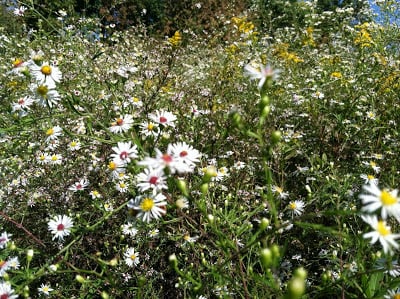
But the white aster continues to feed in abundance.

It was a big chunk honey week in the honey house. In a less then ideal honey year, comb honey is pretty hard to get.
Perfect comb, that is.
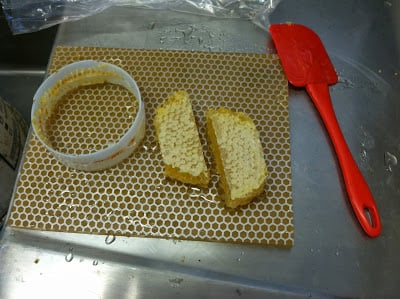
As I think I said in a previous blog post, we produced hundreds of Ross Round comb sections that didn't quite make the cut.
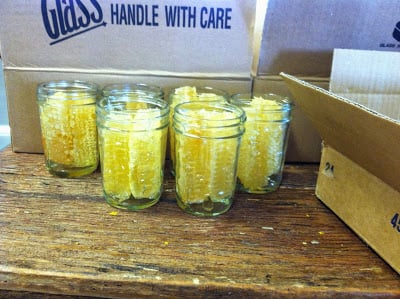
This means they get sliced and go into a jar as chunk honey.

These will be put into the freezer a while. Eventually they get pulled out, bottled with summer honey surrounding the comb, labeled and taken to a farmers market. Expect to see them most of the winter at Worthington.

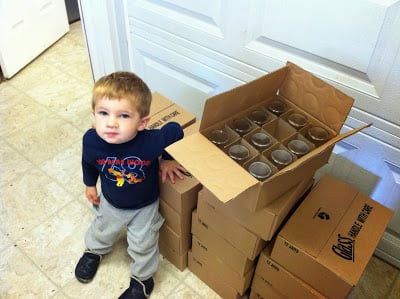
Bridger helped.

This evening, instead of cutting up comb honey we cut up pumpkins. Maizy's preschool had their annual day of pumpkin carving on Darby Creek Rd.

 Pumpkins, songs, cookies and juice...

And Bridger helped.