Contact Us

Use the form on the right to contact us.

We respond to most emails within 24 hours.  

9642 Randle Rd
Williamsport, OH, 43164

Honeyrun Farm produces pure raw, honey, handcrafted soap, and beeswax candles in Williamsport, Ohio

Blog

CCD, Catching Swarms, Russian Bees, and White Boxes: More Beekeeping Questions Answered

Honeyrun Farm

  1. -Posted by Isaac
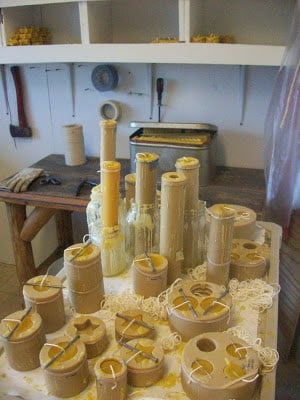
    Our Candle Pouring Station
    I like to start these dark December days pouring candle wax and listening to the alternative station. Yesterday I heard an awesome song that stuck in my head the rest of the morning.  Some of the lyrics went like this:
    It's better to feel pain   --  than nothing at all...
    The opposite of love   --  is indifference...
    Do you know the one? Well you might. Much to my chagrin I came to find out that my little discovery, a song I planned to learn and try singing for Jayne or whoever, has already gone mainstream. I heard it again last night watching football with Dad. It was background music in a commercial selling baseball gloves or something. Funny how your perspective can change. Maybe I won't learn it now. Oh well, I still I got a day of nostalgia out of that song. 
    We'll try to keep our beekeeping practices from mainstreaming. Size and efficiency in modern beekeeping, as with all modern agriculture, has no doubt brought higher production. But higher production is only a silver lining. There are also big black clouds concerning food production. I'm sure many of our blog readers are well aware of this. Julie Scordato touched on this in her question:


    "Can you give us an update on colony collapse disorder? Is it still bad? Are changing practices helping? Should we still be worried? What have you seen locally regarding this?"
    Colony collapse disorder (CCD) has not been in the headlines as much as it was in 2007 and 2008 but it's still a problem and research into the multitude of various causes has yet to come up with a definitive answer. Some bigger migratory beekeepers claim that keeping their bees away from row crop agriculture (corn, soybeans...) has helped colony health. On our small operation, we do lose bees (15% last winter) we've not seen anything like the CCD symptoms. Mites continue to be our nemesis. And I think this holds for other local beekeepers (those whom I have confidence in, anyway.) There are a few large beekeepers in northern Ohio and I haven't heard much in the way of CCD complaints from them either.

    Andrew Scordato writes:

    "There were lots of swarms this year that Isaac was able to collect. With beekeeping full time, do you have a goal number of hives you want, or is the sky the limit?"

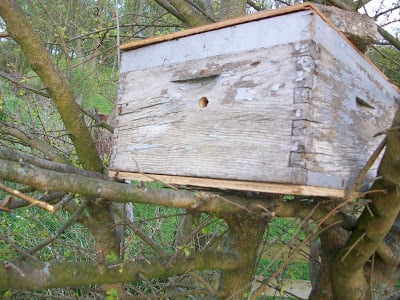
    One of our "swarm catcher" boxes we use in the Spring
  2. I think about this all the time, Andrew. The market for local honey at present seems endless, so we continue to grow with hives and equipment. I'm building enough woodenware to reach a goal of 300 hives this year. We'll decide from there. There's a point where your practices are compromised as well as time with family and other obligations. Right now, I tend to babysit the hives more then I probably need to. We can definitely increase from our present 230. How many more... who knows?
    Little Molly Scordato writes:  "Will you ever consider hybridizing with Russian honeybees for hardiness to weather and parasites? Aren't the russian bees notorious for sussing out and destroying certain hive parasites that the Italian bees tend to tolerate at their own peril?"

    I bought 30 Russian queens a couple years ago and noticed a few things good and bad:

    -The bees don't accept the queen as readily.
    -They don't seem to make as much honey.
    -They seem to weather the winter better, but not at a significantly higher survival rate then the Italians.
    -They don't eat as much honey in the winter, but seem to build up very slow in the spring.

    I need to try a new batch this year. For me, the jury is still out on the Russians, but thanks for the reminder.
  3. Our bees are a healthy mix of Italians, Carniolan, and Russians.
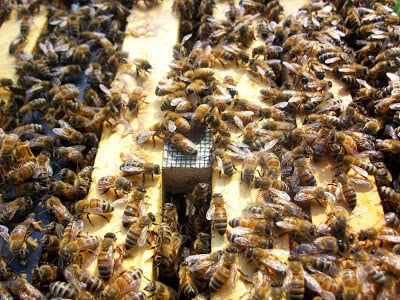
    See the little queen cage in the center?  The bees will eat the candy plug,
    releasing their royal highness. 

    Marci writes, 
    "Why are most bee boxes white?"
    I've wondered this myself. Maybe white reflects light best in the Summer, thus keeping a hive cool. I suspect it has more to do with the cheap and plentiful supply of white paint.
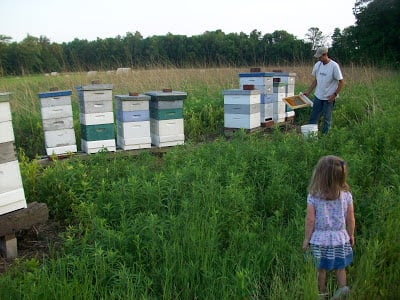
  4. Honeyrun Farm Boxes - a little bit of white, purple, green, gray, and
    whatever color of exterior paint we find on sale at the hardware store.
    Leah asks,
    "How many times can you harvest honey from one hive in a year? I know you have Spring, Summer and Fall honey. But maybe you keep some hives for Spring harvest, some for Fall etc."
    This all depends on weather and location. Of our 21 bee yard locations, only six are close enough to groves of Black Locust trees that we can harvest Spring honey and confidently call it Black Locust honey. If it's a year like 2010 where God smiles down on bees, you can pull honey from a single hive in all three seasons. There was just an abundance of nectar and sunshine. A rainy, cold year like 2011 means you're lucky to have any honey at all. For the most part, you can depend on almost all hives producing a Summer crop with the Spring and Fall honey being kind of hit or miss and having a lot to do with the abundance of nectar producing plants in the vicinity of the yard.

    Spring, Summer, and Fall Honey
  5. Katie asked a question that really got me thinking:
    "What about beekeeping is most rewarding?"

    Happiest after a big honey harvest
    The short answer is pulling honey-- seeing my labor come to fruition, and knowing I don't have to go looking for a "real job" to put food on the table. The deeper answer is my general fascination with bees and their place and our own place in the world. Sounds cliche, huh? If you end up keeping bees you'll notice that you're more in tune with what's going on outside, what's growing, what's blooming, the temperature, the sun, the rain, the wind etc... You'll notice what the farmers are doing, where certain crops are, where tree lines, fence rows, woods, streams and set-aside areas are... what's being sprayed and planted, what's being plowed under, what's being built...
    In general, you become more aware. I like this.
    She also asks,
    "What advice would you offer someone interested in getting started?"
    Prepare yourself for broadening horizons, great high peaks of joy and mystery and reward. Brace yourself for deep valleys of death, depression and worry.
    And join a bee club.  Scioto Valley Beekeepers, our local club, is offering a beekeeping class this coming April, if you feel so inclined.  
More Questions - Beekeeping

Honeyrun Farm

-Posted by Isaac

Well, I had said my next post was going to be about the wax rendering process, but this, Jayne's genius idea of making some blog posts by answering questions, takes precedent. No, I'm serious... it really is genius.   It gives some future ideas for posts, plus it lets us have a little dialog with you guys. Please don't hesitate to ask more or comment. Though I'm not, I love feeling like an "expert."

So here are three questions we had concerning bees:
Stacey Shehin asks,

"Is it OK to leave 3 supers on top of the bottom two brood boxes over the winter (i.e., 5 supers total)? Is that too many to have on a hive over the winter?"
Hives should weigh over 60 lbs going into winter
It's perfectly fine to leave on as many supers as you want over the winter. That's just more food for the bees. Typically I take everything off, leaving just the two brood boxes if I feel that there is enough honey in there to support the bees through the cold months. If they're light in September (below 40 lbs), I'll feed sugar syrup and protein patties. If they're light in October, I'll leave supers on as you're doing. It's healthier to let the bees eat their own honey rather then syrup. Plenty of honey left on in the Fall, usually results in a strong colony in April and a super Spring honey crop in June.

Kim Benson had kind of a tough question:

"This is our first season with a bee hive. We looked at them 10 days ago and noticed several dead brood with a tiny hole in the cap. What could cause this? We saw a few mites and a few hive beetles, which we are taking care of. Any thoughts would be appreciated." 

It's hard to really make a definitive call on this without seeing the hive. If your population is good and over 90% of the brood looks healthy I'd say you're ok. Truthfully, my first thought was that you've got an American Foulbrood problem, but with this, you would have noticed a putrid smell. The tiny holes in dead, sunken brood cells are a symptom of this. Mites and hive beetles are in most all hives, and it's a numbers game with these guys as to your level of concern.
American foulbrood
Mites- The real scurge of beekeeping           
It's tough your first year because you haven't seen a whole lot of cases of this or that... you're still gaining experience (as am I!). At any rate, in December it's too late to do much or to worry much. Take a look on a warm day in February and see what you've got. Dead or alive, you've learned something... start from there. Hope springs eternal in beekeeping.

Ericka Hill asked an interesting question:

Have you discovered whether individual bees have personalities? That is, can you have a relationship with them or are they sort of....anonymous?
I laughed upon first reading this question, but the more I thought about it, the more it intrigued me. It's really a great question, Ericka, and there are many levels to it. In short, yes, I have noticed that individual bees have personalities. I notice it any time I've got one old prickly worker bee buzzing loud and hitting my veil for an extended time. You'll be working a hive and she's at it. Ten minutes later, two hives down the line, the same old girl is still at it, and everybody else is just going about their business quietly buzzing in and out. I'd say this really is a personality. And if I grow tired of the nuisance, our relationship is pretty short-lived.
A bee's "personality" varies with age and genetics. A young nurse bee, less then two weeks old is going to be very docile, almost sweet. As she ages and becomes an older forager, she grows wise to the ways of the world and becomes a bit meaner, more protective.
A "young'un"
Keep in mind that the personalities of all these bees stem from a single mother - the queen. If a certain hive has an angry old bitty for a queen, all the daughters are going to be somewhat angry and bittyish. Thus making this hive aggressive and not fun to work with. It's amazing how requeening can improve a hive's demeanor.
Mean or sweet, it's a joy to work in the hives. I'll keep your question in mind the next time I'm in the bees. I'll try to actually observe some other personality traits aside from the few individual bees heckling me. 


More questions answered: Creamed Honey and Honey Sticks

Honeyrun Farm

-Posted by Jayne

Our give-a-way last week has provided a lot of great ideas for blog posts.  We've decided to answer a few questions here and there, rather than writing a book in one long blog post.  Here are a few more of the "easy" ones that I can answer.  I'm going to leave the more technical beekeeping questions for Isaac.

Ianna writes, "I've tried and loved all sorts of liquid honey, but only just recently just tried (aka devoured) some opaque, buttery honey. It wasn't crystallised, it was just buttery smooooth! How is that made? What's the difference (outside the obvious :) between that opaque buttery honey and liquid honey?"

Good question!  I believe what you are refering to is "Creamed Honey."  There is also a product called "Honey Butter" which is butter mixed with honey, but it sounds more like you had Creamed Honey.  This product is very similar to our "Naturally Granulated Honey," but very different in one regard.  Creamed honey is made by using a "seed" which is really just another creamed honey that has a specific type of smooth granulation.  All honey will granulate, but depending on the type of honey (what nectar it is from), it has different sizes of granules.  Here you see some lighter early Summer honey with a pretty fine granulation:
 And here you see some late Summer honey that has not quite granulated completely.  It is still a bit more runny and smooth.  We have sold both as "Naturally Granulated Honey," since we don't do anything to it... just let the honey sit and get more creamy and solid.  BUT.. if we were to make creamed honey, we would start with about a pound of the "seed" honey, and add it to about 12 lbs. of liquid honey, and mix it in our Kitchenaid Mixer for about 5 minutes.  Then, you put it in your jars and store it at a temp of about 56 degrees for a week or so.  Wah-la!  Creamed honey!  If you wanted to try this yourself, you can google "How to make creamed honey" and come up with similar recipes.
Come to think of it... that would make a wonderful Christmas present!  Buy a large jug of honey, a pound of creamed honey, and you can make your friends and family a wonderful "homemade" gift!

And one more question for today.  
Jen asks, "Is it easy to make honey sticks?"


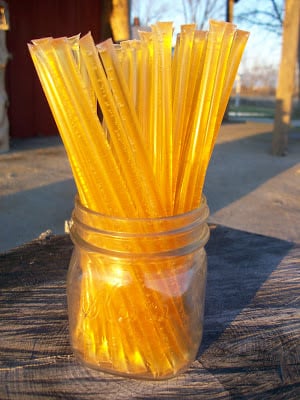
It would be fun to tell you we use a little dropper to
get the honey in the stick... but I don't think it would be
very believeable!
Actually, yes it is!  For us, at least....
We don't actually put the honey into the little stick ourselves.  This requires a machine that costs about $18,000 dollars (or so we've heard).  We have found a company that allows us to send them our honey, and they put it in the little sticks for us (for a fee, of course).  We know other beekeepers who just buy the sticks from the company and re-sell them, but we are really proud to have our own honey in the sticks, so we actually feel it is worth it to send our honey to them so we can have our own Honeyrun Farm honey sticks.  So aside from lifting a 60 lb. bucket onto the counter at the post office, the task is really pretty easy.  Who am I kidding, I always make our post master Ron lift the bucket for me.  Thanks Ron.  

If you'd like to come see us this weekend, we are selling at the Worthington Winter Market on Saturday from 10-1, and at the North Market Holiday Show from 8-5 on Saturday and from 12-5 on Sunday.  Have a wonderful weekend!

And the winner is.... (drumroll, please)

Honeyrun Farm

#1 !!  Julie Scordato, please step up and claim your prize!!!

Using the True Random Number Generator at Random.org, response #1 was chosen as the winner to our $25.00 gift certificate, with free shipping!  Julie, it is time to peruse our shop and decide what you would like.  (And really... does #1 EVER win??)  Feel free to post your acceptance speech in the comments section, Julie.  Just don't rub it in to the losers too bad.

Now we have some insightful questions to answer from our blog readers.  Here are just a few quick answers to a few:

65 Roses for Marcia asked:  "Can you bring some honey for me if you are coming for thanksgiving? And what is your very favorite kind of honey out of all the types you produce??"

Our Answer:  Our honey is now for sale in 2 locations in Holmes County, Marcia!  Country Craft Cupboard- in Berlin, and the Walnut Creek Flea Market (this is the one located near Cherry Ridge, towards Sugarcreek).  Our favorite kind of honey is Spring honey, due to it's light delicate nature, however we use Summer Honey more often in cooking.  We actually have a 2 lb. jar of Spring, Summer, and Fall on our kitchen table at all times.  

Spring honey is our favorite... because it is light and delicate,
but also because it is rare.  We hate to see it sell out!
And Cappywanna asks:  "I have seen whole pieces of honeycomb sold at farmers markets and such- what would you do with a whole comb? just shove it in your mouth and chew? mmm..."
Comb can be chewed, spread on toast, spooned into tea, eaten with cheese,
peanut butter and honey sandwiches... the possibilities are endless!

Yes, indeed... shove it in your mouth and chew!  You can even eat the wax, although many prefer to chew the comb until the honey is gone, then spit out the wax.  Old-timers say that comb honey was the first chewing gum.  It was a treat for kids (and still is today), and also great for spreading on toast.  Some people prefer comb because it guarantees that the honey is raw.  If it was heated, the comb would melt!  

Thanks again for all the great questions!  We will answer more in upcoming posts!

-posted by Jayne

The Great Honey Give-a-Way!

Honeyrun Farm

***This contest has ended.  Thanks for all who participated!***

We're giving away a $25.00 gift certificate to our online store at www.honeyrunfarm.etsy.com!  Enough of us blabbing on and on about beekeeping and our children and such.  You really follow this blog on the off chance that you might win something free eventually, right?

Well, here's the deal.  Leave a comment below asking us a question.  It can be any question, but preferably something insightful and intriguing that you always wondered about beekeeping or beekeepers or bees.  Some examples could be:

-How on earth did you get into this?
-What is a varroa mite?
-Why are honey storage boxes called 'supers'?
-Why can't babies eat honey under the age of 1?
-Why does honey granulate?
-Why are most bee boxes white?

See how many good questions I came up with in just a few seconds?

If you don't have any good ideas, you can ask boring, lazy questions like:
-What color are your socks?
-Why doesn't Isaac wash his bee suit more often?
-Do you ever get stung by a bee?
You get the idea.  Any question will do.  We'll try to answer the good ones in upcoming blog posts.

We will choose the winner via a random number generator.  Contest ends on Cyber Monday, November 26th at 8 pm EST.  We will post the winner here, and notify them by email, so if you choose to post anonymously you will need to leave an email address in the comments section as well.  Contest is open to anyone in the United States, even family members, close friends, and those we bribe to visit and read our blog.  (Sorry, no international contestants, please... due to shipping limitations). Good luck!

And here is a sampling of what a $25.00 gift card could get you: (we pay the shipping, by the way)

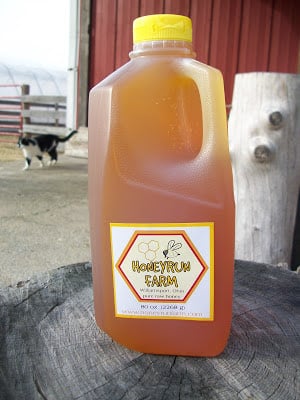
5 lb jug of Summer Honey (yes, just $25!)

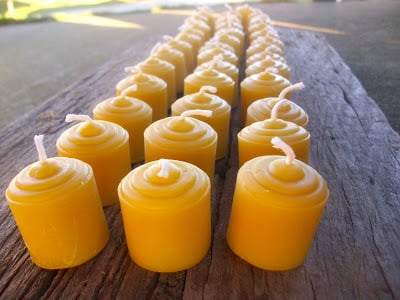
25 of these bad boys...  

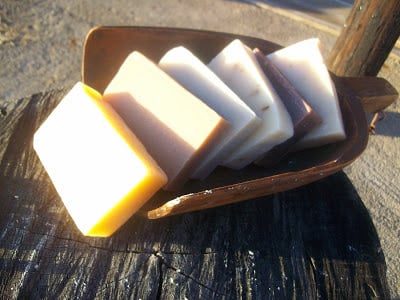
6 bars of soap (okay so @4.50 each we know that's 27.00,
but we'll give you the $2 difference).

100 Lavender Infused Honeysticks
Thanks for stopping by!  Now let's see some insightful questions.