Contact Us

Use the form on the right to contact us.

We respond to most emails within 24 hours.  

9642 Randle Rd
Williamsport, OH, 43164

Honeyrun Farm produces pure raw, honey, handcrafted soap, and beeswax candles in Williamsport, Ohio

Blog

The Pollen Count Is High. Yay!

Honeyrun Farm

-Posted by Isaac

I just love this time of year.
And so do the kids-
(Look at the willows in the background nearing full glory!)

And the the other kids-

And I assume, judging by the hum in the willows, so do the bees.
Yesterday afternoon the tops of the willows were abuzz with the music of spring. It was the first day for these trees.

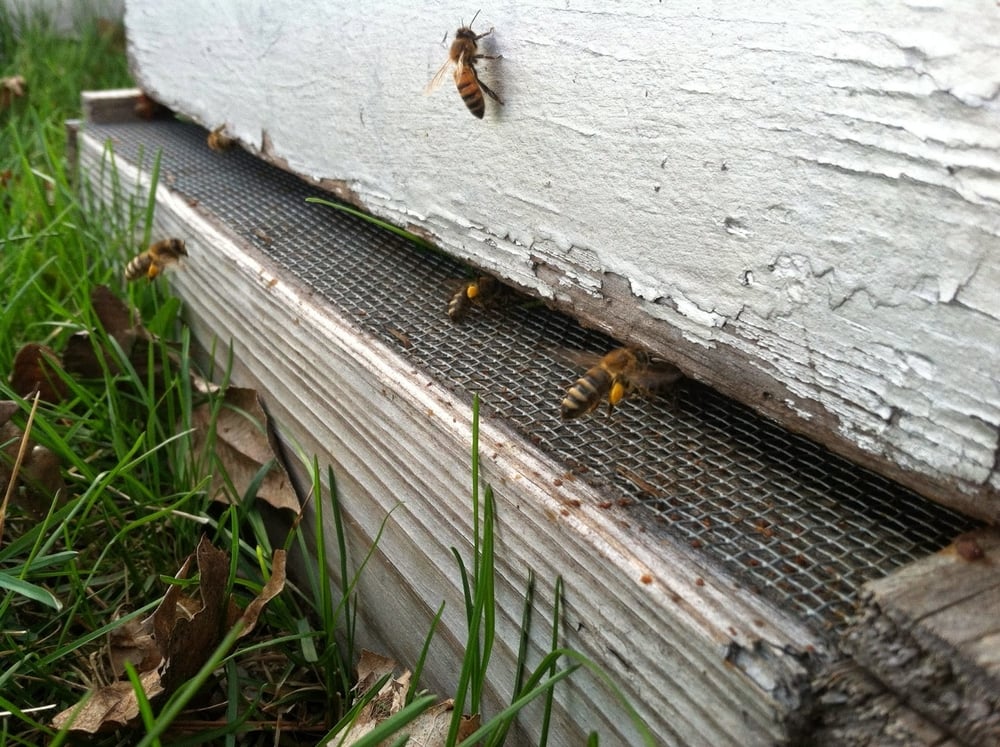
Loads of yellow pollen are being hauled into the hives.
Good food means more bees to come! These girls need to be ready to pollinate apples in three weeks.
The willows were preceded by the purple deadnettle.

The pollen from this awesome ground cover is blood red and seems to be just as well liked as willow pollen. 

The deadnettle is in ample supply this spring.
In the ditches:

And the fields. That is, until our farmer friends burn it down.
If we can just get a rain about every three days it will keep the sprayers and the Roundup at bay for awhile.

Speaking of rain and farmer friends, look at what what I did to Mr. Bigham's pasture this week:
Sorry Bighams. I'll fix it!
I was only delivering supers to the bee yards. Oops. Guess I misjudged the ground moisture.

Maybe we could use a little less rain.

Our home apiary has become a bustling holding yard with sixty five hives. These will all be moved into the apple orchards soon.

The cool thing about having this many bees around is that the minute some new spring pollen source becomes available, we know the good news.

Maizy braved the bees yesterday to come out and tell daddy about yet another miraculous spring surprise...

The daffodils!

Happy spring, everyone!

More Global Warming, Less Climate Change Please.

Honeyrun Farm

-Posted by Isaac

I was just walking through the field with Bridger and my cousin Jed a few hours ago and stumbled upon this beauty:
What a way to make your day!
Did the maker of this arrowhead have climate worries? Bet not. Weather worries? Bet so.
But I'll also wager that they didn't complain about it nearly as much as I do. Even though, at times, it was probably a matter of life and death.

For me, this dreadful winter was just a matter of mild discomfort. Physically, mentally and financially.

For the bees, of course, it truly was life and death.
More death then life, unfortunately. 65% gone.


Much blame to be placed squarely on the incompetent beekeeper.

But you can always blame Climate Change, right?

The old timers in the bee club are saying it was the worst winter in 40 years. Most are saying it was the worst bee year ever because of the added stress of a poor summer honey flow.
This meant that March was filled with bee yard clean-ups. So many dead-outs.
Mr. Blair had his fill of dead bees.
 Like one last kick in the ribs, spring finally arrived (technically) and we've had snow the last two weekends. Huh??

Still, for beekeepers, hope springs eternal. The warmth has arrived, though fickle with wind and rain. I think we've seen our last frozen dead cluster. I've been feeding the living and dreaming of dandelions.

Throughout March there were still many pleasant surprises. So surprising in fact, I couldn't help but snap some photos of a few future boomers:


Future "Boomer"
We could definitely use a bit more of this.

And a lot less of this:
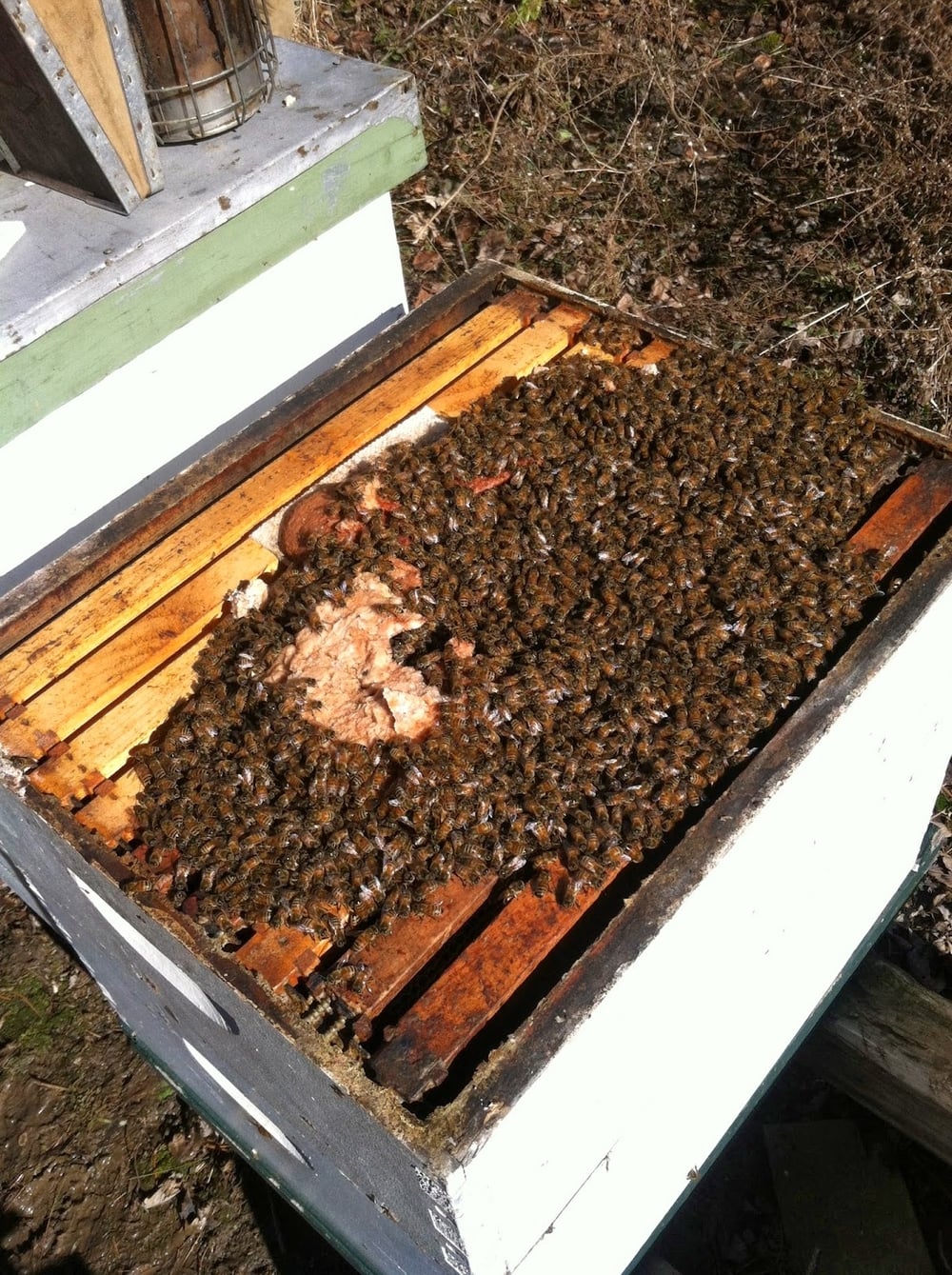
Dead. A should-a-been-boomer.
Blame it on the beekeeper.

In a few of the less fortunate bee yards the many lifeless brood boxes about filled the truck.

Swing Low, Sweet Chariot
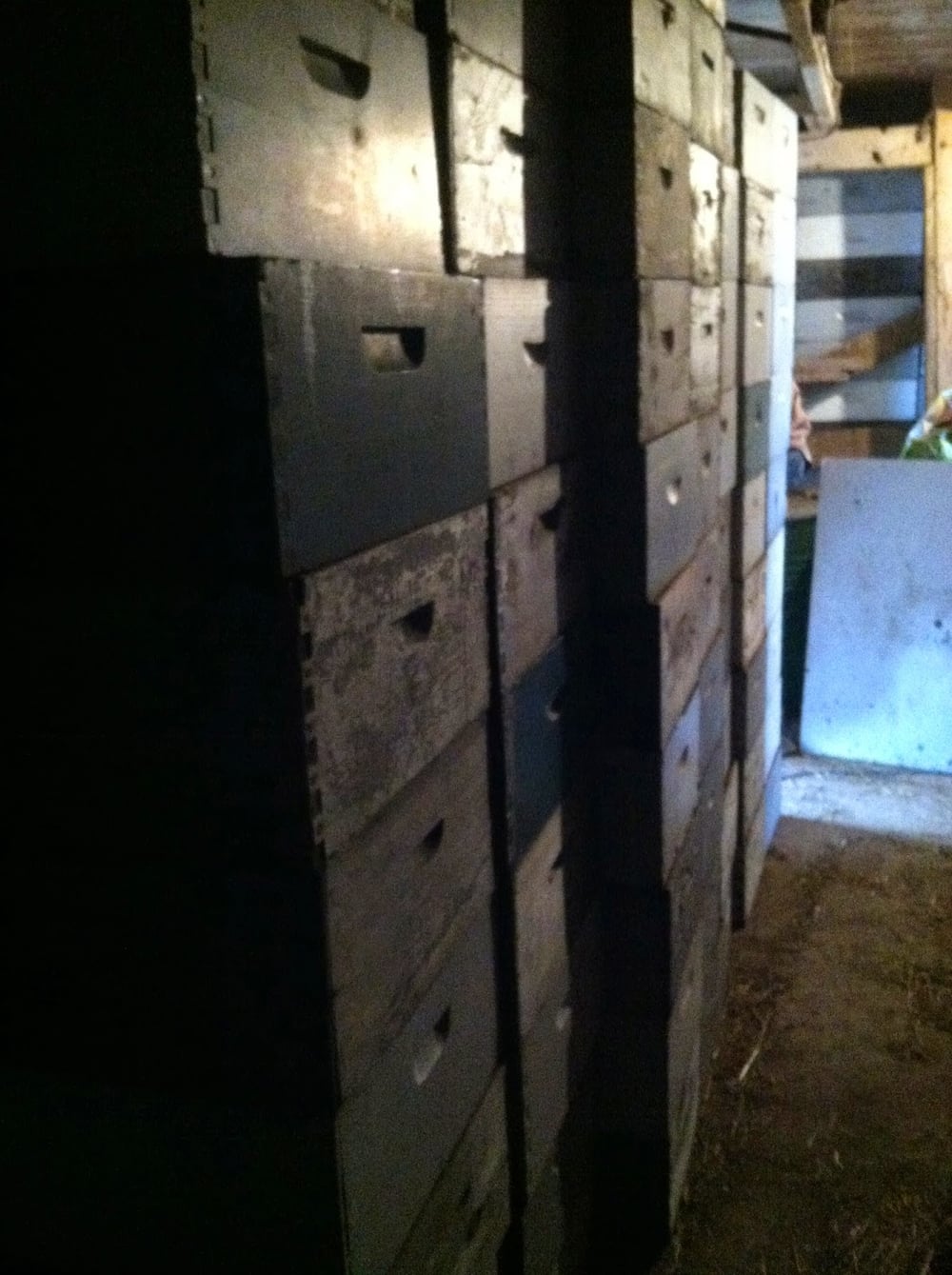
The dead-outs went to the barn to await cleanup. (Which happens to be what we're doing now.)
It became a growing wall of death:

Not all doom and gloom.
The hives with young queens and plenty of honey stores were actually just fine.
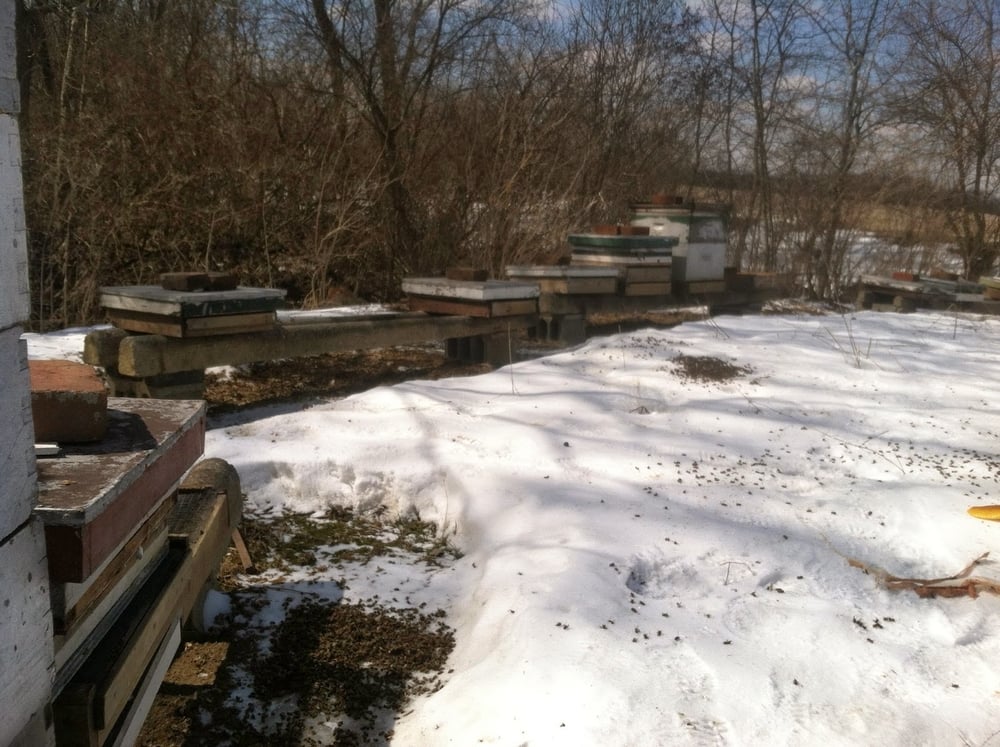
Best yard- One dead:

Worst yard- One alive:

When I worked for the Morris Honey Company (2006), we took all the bees to the citrus in far southern California. This was after the almond bloom in February.  Wayne, my boss, liked to brag that he was the only beekeeper in the country who extracted honey beginning in March.
Well Wayne, eat your heart out:
Dad looks on in wide-eyed wonder.

So many of those dead hives were still heavy with fall honey. We ended up extracting around 600 lbs.

I know, I know, a good beekeeper would use this as feed for a strong spring startup.
Nah. Too valuable. We'll just hope for pleasant weather accompanied right on schedule by the lush rush of blooming trees and flowers.
Yeah right.

We want to Pump You Up!

Honeyrun Farm

-Posted by Isaac

This time of year is hard on bees. The weather is turning, sun is out, days of flight are taking place with increased energy expenditure. The queen's egg laying rate is on the upswing, the brood nest is building... but there's nothing to eat!
In this area, until the maples bloom, there's really not much out there. 

Here's a little trick for some quick protein.
Dry Feeding:

This bag came free, compliments of Joe Latshaw, and compliments of Dan Williams our Scioto Valley Beekeepers club president. (Dan's always hobnobbing with the bee world upper echelon.)
It is basically a protein / nutrient mix meant for combining with syrup and placed on the bees in patty form. I mentioned feeding patties in that last blog post... same thing.
Bee Pro from Mann Lake works well also. But we've actually had to pay for it.

The good thing about dry feeding is that it requires all of one minute in the bee yard. You can cover a lot the ground fast.

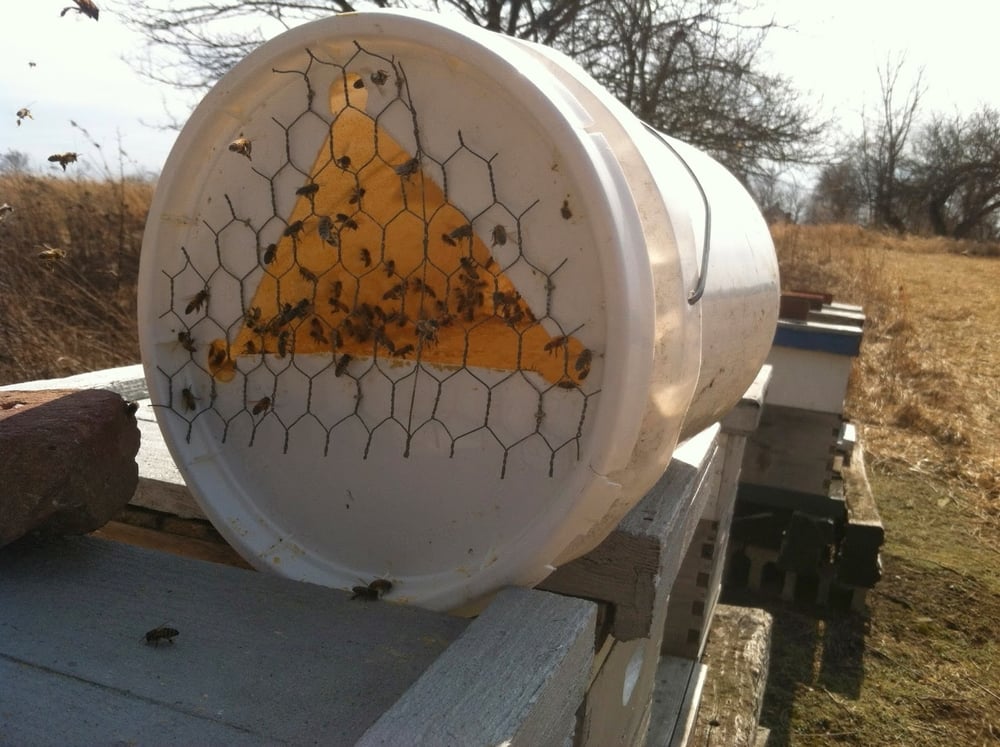
I like to use buckets turned sideways with a hole cut in the lid. This keeps the powder from getting wet. The chicken wire keeps unwanted guests from grabbing a free meal. Placing the bucket high helps with this also.

The bees are crazy about it.

Until the maples bloom... then they simply ignore it.

The Best Pet

Honeyrun Farm

-Posted by Isaac

Just when I blogged about Mason having virtually no interest in bees, he latched on to the idea of helping dad. "It's about SCIENCE, Mason!"
Or maybe he simply liked the repetition and practice with his counting. We spent several evenings placing nearly 3000 frames in supers. 
Even Maizy pitched in. (In spurts) 
Bridger, not so much. But somebody had to manage the operation.

We had a lot to get done:

Mason also helped in conducting a little experiment.
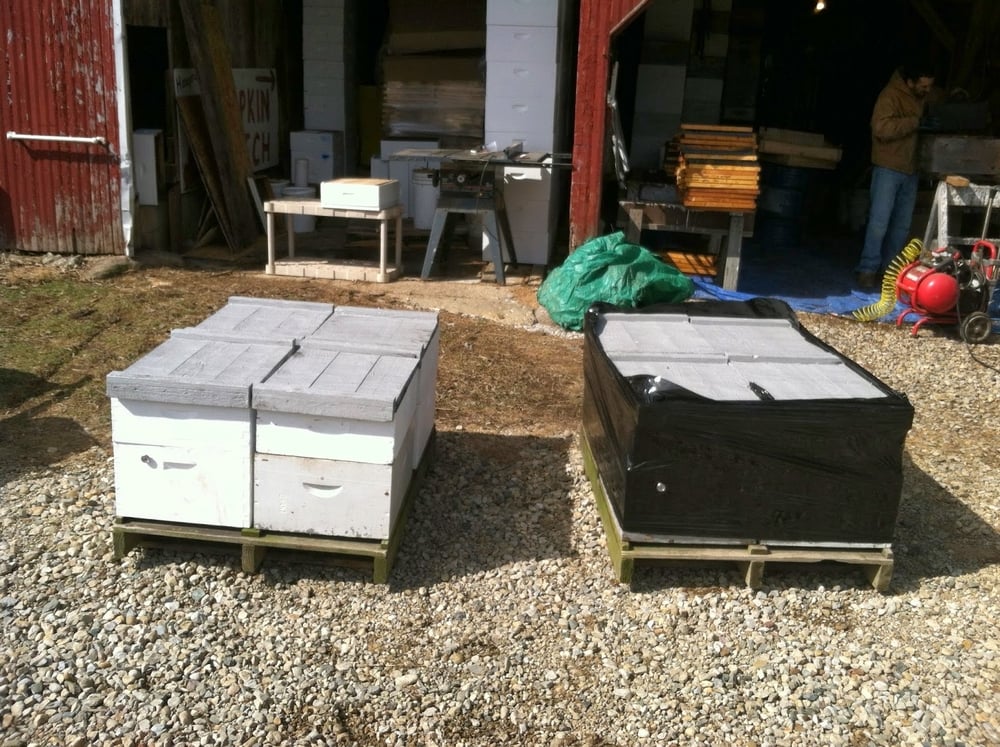
Dan Williams, our bee club president has been posting about the thermal retention of hive bodies when wrapped in tar paper. (With some amazing results.) I had to see it for myself.
This is black stretch wrap instead of tar paper.
Thank you, Jim North
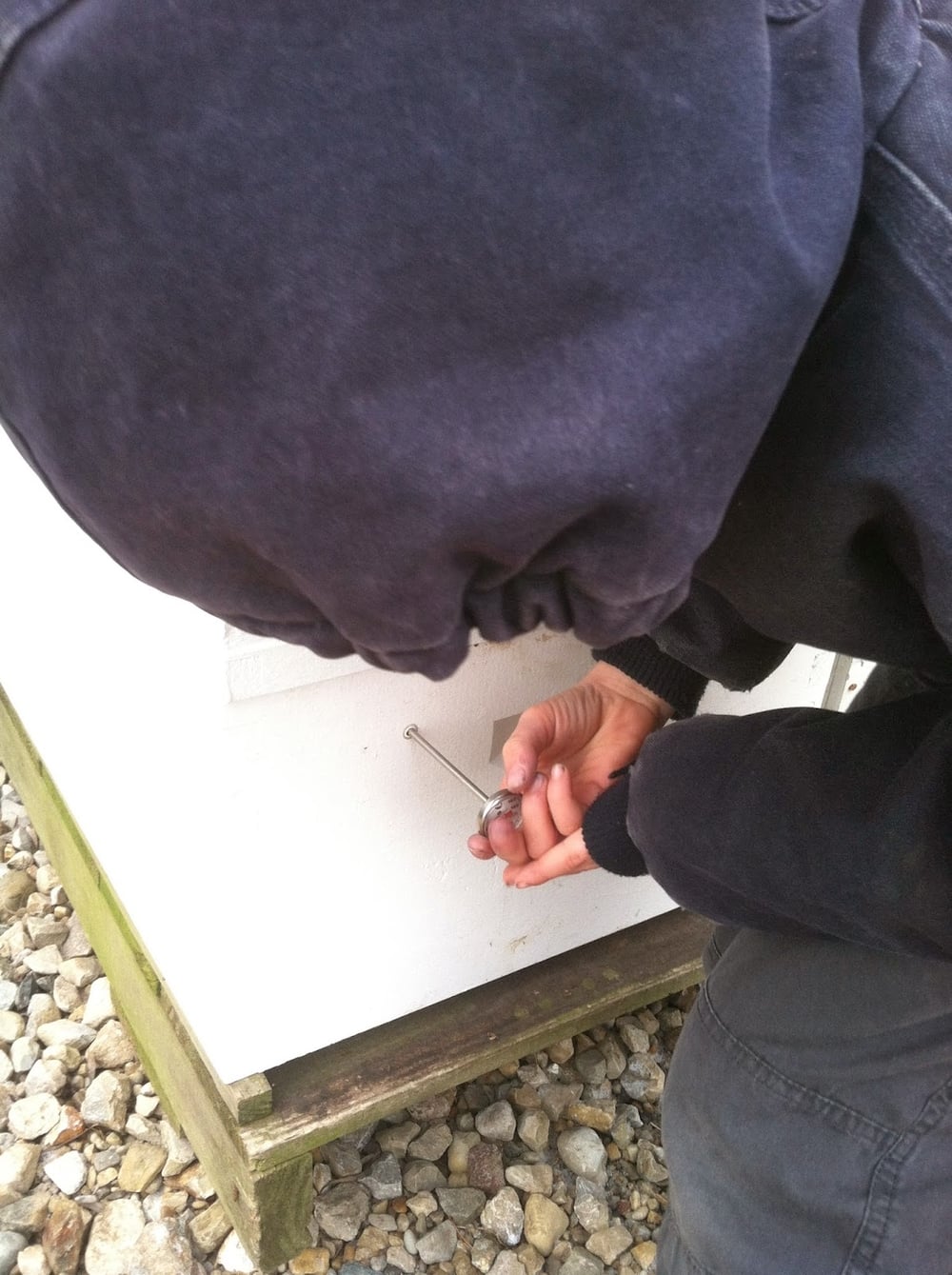
 Mason inserts the temperature probes.

 And sure enough, after about two hours in the sun the hive bodies wrapped in black had gained nearly eight degrees.

With a living cluster of bees, those precious degrees would surely be retained and appreciated.

Maybe we'll get smart next winter.

Beekeeping must have crept into Mason's thinking. One day last week he brought this home from school:
That's my boy!
Maybe his grammar could use some work, but he has already surpassed his father in handwriting and spelling. (Thank you, Spell-check.)

We were talking about what bees eat and how they make honey (Huny). The word "nectar" came up several times and I realized (I think) he's probably getting nectar confused with the protein patties we're putting on the hives this week.


Yes, bees eat nectar, but this time of year they relish protein. The winter pollen stores are diminished and they need some protein muscle to build up a healthy brood nest.


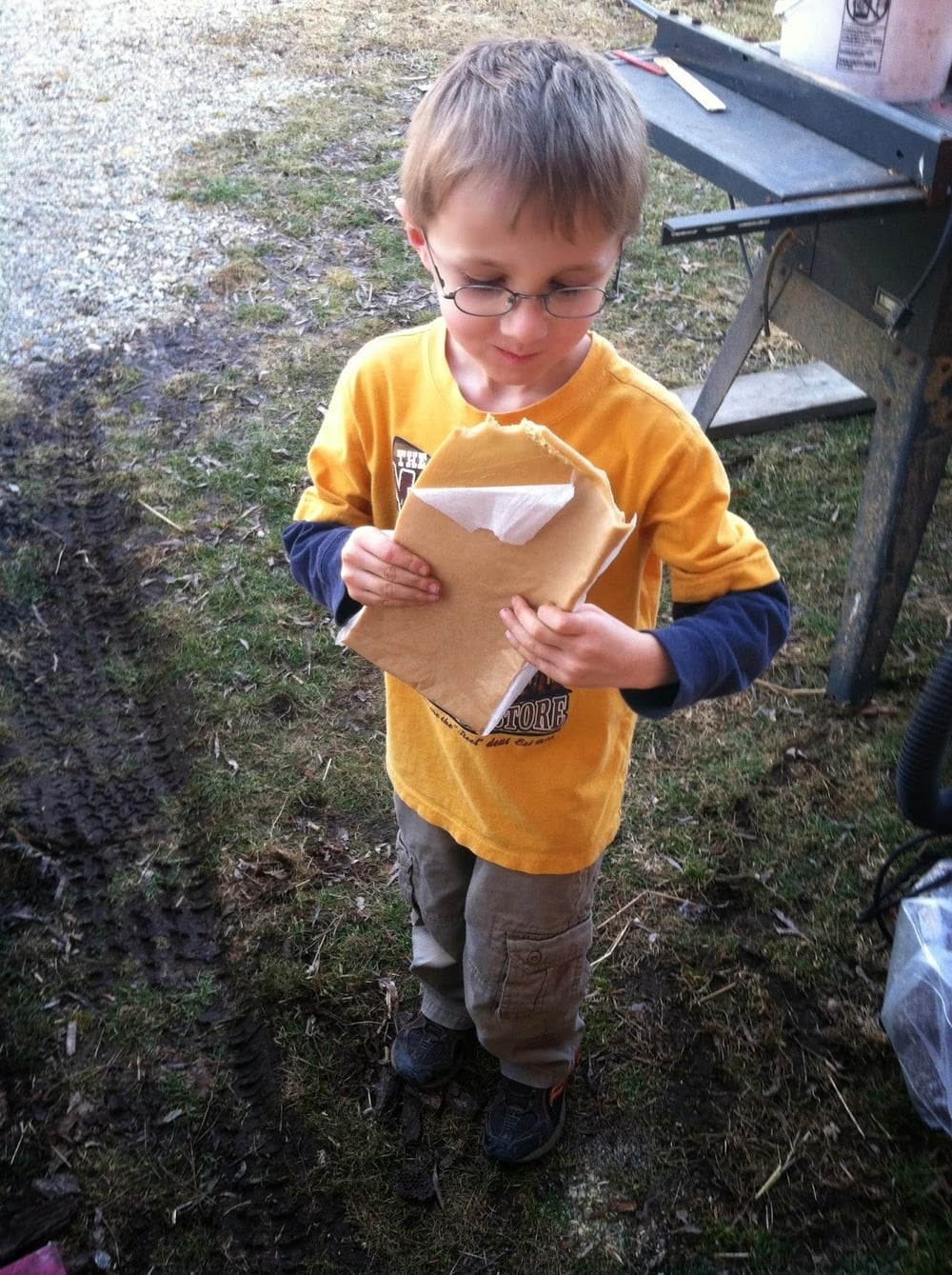
Ummm... Not too bad!
So bees eat Neptr and boys eat Neptr.
A kid'll eat Neptr too.
Wouldn't you?

Does Your Beeswax "Bloom"?

Honeyrun Farm

Have you ever noticed your beeswax candles changing after they sit in your house for several months? There is a natural process called "bloom" that happens to 100% pure beeswax candles.  Bloom refers to the whitish cast that takes over the outside of the candle.  It does not affect the way a candle burns, and is simply a natural process of the softer oils of the beeswax rising to the outside surface.

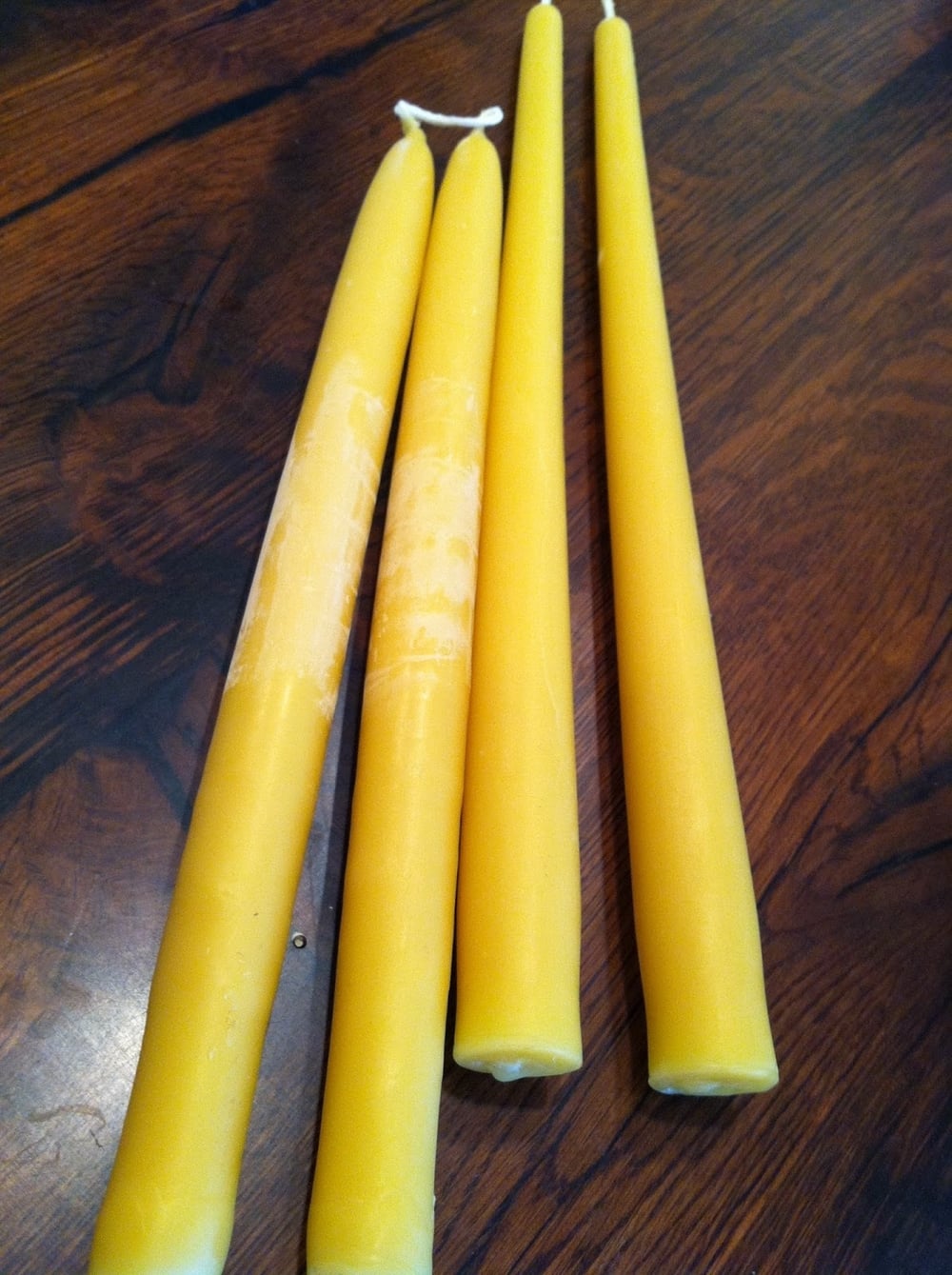
Here is an example of beeswax candles that have "bloomed."  They were sitting in a very cold part of our honey house for several months.

Beeswax with bloom.


And pictured below you see the exact same candles, just moments later.  To remove bloom, simply rub the candles with a soft, lint-free cloth.  Another method I like to use is gently blowing on them with a warm blow-dryer.  Both methods work well.


Here are some taper candles with bloom.


Here you can see how I used a warm blow dryer on the candles without taking the center tag off.  The bloom remains on the area that was not warmed.


And here is the finished product - candles after the bloom was removed.  After you remove the bloom, you may see it reappear again after several months.  Cold weather tends to cause the candles to bloom more readily.  But the good news is you can always restore the candles back to their original luster if you wish.  


-posted by Jayne