Contact Us

Use the form on the right to contact us.

We respond to most emails within 24 hours.  

9642 Randle Rd
Williamsport, OH, 43164

Honeyrun Farm produces pure raw, honey, handcrafted soap, and beeswax candles in Williamsport, Ohio

Blog

Find Us at a Farmer's Market

Honeyrun Farm

Where to find us at market in the coming weeks:

Saturday April 28 Worthington Winter Market - 10 am -1 pm, 777 N .High St.

Saturday May 5, The North Market 8 am-12 pm. 59 Spruce St

Saturday May 12, The North Market 8 am-12 pm. 59 Spruce St and Worthington Summer Market 9-12

Saturday May 19, Worthington Summer Market 9-12 and The Columbus Craftacular, 10-6

Saturday May 26  The North Market 8 am-12 pm. 59 Spruce St and Worthington Summer Market 9-12

We've had lots of inquiries as to when we'll be at market in the next few weeks... so here is the answer!  Come see us and check out some new products:  Lavender Infused Honey Sticks, Miniature Soap Samples and Soap Sample Gift Packages, and Beeswax Tea Lights, too.  All items will be in the Etsy store soon.

Honey Marinated Chicken Breasts

Honeyrun Farm

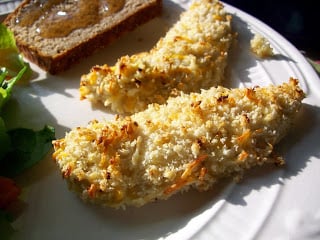
 Last October I had the pleasure of assisting Tricia Wheeler, editor from Edible Columbus, with a cooking class.  She created the most wonderful recipe for Honey Marinated Chicken Breasts, and I wanted to share it here.  This dish has become a favorite at our house.  The last time I made this recipe and took the picture below I didn't have extra-fine breadcrumbs... so you may want to look for that style because it creates a more fine textured coating.  Either way, it is still delicious!

Honey Marinated Chicken Breasts
Serves 6
6 boneless, skinless chicken breast halves
1/3 cup Dijon mustard
1/4 cup white wine
1 tablespoon honey
2 cups fine breadcrumbs
1 cup finely grated extra-sharp cheddar cheese
Preheat the oven to 500 degrees. Flatten each chicken breast half with a meat pounder. (You want them to be somewhat thin so they cook quickly.)  For the marinade, put the mustard, wine and honey in a large ziplock bag. Add the chicken breasts, seal the bag and marinate in fridge for an hour. In a medium bowl, thoroughly mix the breadcrumbs and grated cheese. Dip the marinated chicken breasts in the mixture, coating all sides. Place the chicken breasts in a greased baking pan (I like to cover it with tinfoil) and cook in the preheated oven for 10 to 12 minutes.  I use a digital thermometer to make sure they are cooked through, but you can tell they are done if the juices run clear.  Be sure to check them so you don't overcook them.  You want it juicy and moist, not dry and overdone.
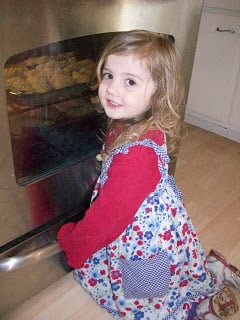
The great thing about this recipe is the chicken is heated for a short time at high heat, so they don't dry out, but retain a flavorful, juicy taste.  It also means less time sitting in front of the oven watching it cook!

Things I Never Knew Existed (Before We Started Beekeeping)

Honeyrun Farm


-posted by Jayne

I was wondering around the farm the other day when I stumbled upon this:
I thought to myself. "Funny. A few years ago I wouldn't have had a clue what this is. Now, I have bowls of them lying around our place." Then I realized I had a whole list of random things that adorn our farm, and most people who saw them would be clueless as to their uses. Then I thought, "I bet some of our blog readers would be interested in some of the random things that beekeepers know about." So here you have it. My list of "Things I never knew existed before we started beekeeping." And I still have a lot to learn. But I thought I would start by sharing a few...

1. So I'll start with the above image. It's an empty queen cage. (The bowl above was full of queen cages). Sometimes, when a hive is really strong, we will split it in two. We leave the old queen with some of the workers, and then we take the extra nurse bees and brood and combine them with the new queen. The queen arrives to us with some worker bee attendants who take care of her until she is transitioned to her new hive. The bees actually have to "eat" their way to her through a little candy plug in the side of these boxes. If she is introduced too fast, the worker bees can reject and "ball" her, basically suffocating her. So we do it slowly, and cross our fingers that they will accept her as their new queen.
2. Propolis. See the dark brown grimy stuff between the two frames of honey? It's propolis! I am just beginning to learn about all the wonderful aspects of propolis. What is it, you ask? Propolis is a type of resin that is actually produced by the sap of trees among other things. Bees, being amazingly hygienic creatures, will collect the sap and use it to seal up gaps in the hive. Propolis is one of the main reasons beekeepers need to use a "hive tool" to pry open hives when they want to work with them. Another neat thing bees will do with propolis is use it to encase a dead mouse. That's right, you read that correctly. In the winter, mice sometimes enter the hive looking for a tasty treat, or a place to spend the winter. A strong hive can sting it to death, and encase it in propolis, which keeps bacteria out of the hive. Pretty amazing, huh? This summer I plan to collect propolis and use it to make salves. More on that later, though.


2. Outer covers. These are not that exciting, but I did find a stack of them in the barn (behind Lucky and her dog food bowl). Outer covers sit on top of a traditional Langstroth hive (the kind most beekeepers use). There is an inner cover, too, that sits between the outer cover, and the supers. Now, on to Supers...
3. Supers. Why are they called supers? I'm sorry to say I really don't know. But a super is essentially a box that holds frames of honeycomb and honey. When there is a nectar flow, you can add more supers. In the winter, you take the supers off and leave the bottom hive body, which holds the queen and some workers. When a super gets full of honey, we take it off and extract it, and then return it to the hive for the bees to continue working and re-filling with honey. We always make sure to leave enough honey for the bees to survive in the winter. We feed sugar only when a hive gets low on honey, and if we fear it won't survive without supplemental feeding.
4. Entrance Reducer: This white metal piece that sits in the front entrance of our beehive is used to keep those pesky mice out of the hives in the winter. You can slide the little bar from left to right to allow more or less entrance holes to the hive. Sometimes bees do something called "robbing out" other hives (essentially stealing each other's honey). We can limit this by limiting the size of the entrance to the hives. We don't have these on every hive, but one of my Dad's Amish friends makes them and has given us a good deal on them, so we try them out on a few hives.
5. Pollen trap. This photo was taken last summer when we were out collecting pollen. Before we became beekeepers, I didn't really understand the whole flower-nectar-pollen connection. Basically, the bees drink the nectar to make honey, and they gather pollen as a protein source for the hives. It is especially significant for the baby bees, who eat it as a "bee bread." It is a healthy supplement for us, too, since it is packed with vitamins and minerals and essential amino acids. We harvest it through the use of a pollen trap (Isaac is holding the tray here), which knocks the pollen off their legs as they enter the hive. We can turn the trap on and off from time to time, to leave enough pollen for the bees to thrive.6. Slum Gum. I saved the best for last. This picture is of a yucky substance affectionately known as "Slum Gum". This is a beekeepers term for the residue left over after cleaning beeswax, after the honey has been extracted. Appetizing, I know. Don't worry... remember about how I explained that the bees were very hygienic? Slum Gum is not mixed in with the honey at any point... it is left from propolis that has been scraped off the beehive, along with bits of wax, pupal lining from brood comb, etc etc etc... We stick these in our wood burning stove to help get the fire burning, and let me tell you... it gets very HOT. The first time we did it I seriously thought our house was going to burn down. Don't worry, the house is still standing, and we still use these to heat our home. We just learned to use smaller amounts at one time.

So, that's it for today. I know I missed a lot (queen excluders, feeders, extractors... that's for another post, another day). I hope you all learned some new (and slightly weird) things about what you might find day to day when you live on a bee farm!

Fun, Crazy, Busy

Honeyrun Farm


-Posted by Isaac

We returned home to Ohio about five days ago and Jayne's tulips were in full bloom. What a surprise for April 1st!
Let me take you through the fun, crazy, busy Honeyrun happenings over the last three weeks:
Maizy reminds us, if times get tough, we can always eat the flowers.

So the apple orchard guys called ahead of schedule this year. About five weeks ahead! In previous years the number of hives needed wasn't such an issue, but due to the likelihood of cold setting in, I think they wanted some pollination insurance... about 150 hives total between Sunny Hill and Lynd Fruit Farm. That meant almost all the Honeyrun hives and a lot of work for me... with a deadline.
I hustled out to work a few yards and got the hives strapped up to move.


Then I decided that the best way to go about this was to establish a holding yard and move the 18 out-yards to this location (my parents' place) by night and work the hives by day.

Why my parents place? Hey, there's like 10 million bees out there! Are you kidding... I'm not getting stung.

This worked out pretty well. I had all the equipment and bees in one place. Convenient to balance hives, replace frames, fix boxes, whatever...
It sure made for an exhausting time though. Hours of sleep were slim and none during those four or five days. Slapping myself awake while driving a trailer full of hives one dark early morning, I remember thinking how stupid this is... the dumb things we do to service our greed... (Apple pollination is pretty decent money. And good for the bees to boot!)

One thing that kept me pretty enthused and distracted from the fact that I was being such a deadbeat dad was this:
I've never seen hives this strong in March! Some of these are about ready to swarm...
Big full brood nests, populous bees, healthy and strong. The orchard guys are really getting their money's worth this year.

A few hives were even making a little honey.

I know that sometimes my use of technical beekeeper jargon is hard to understand. A holding yard is a place where beehives are held...
Ha ha. My feeble attempt at wit and sarcasm.


It took two nights in a row to get them all loaded up and hauled to the orchards. The first night I was alone, the second my strong and hard working cousin Adam helped. Thanks Adam! We got home at 3 a.m.
All this moving and working of bees took place in sort of a rush because...
We had a scheduled vacation coming up!

Priorities, priorities...

Cool shades, Mason.
"Dude.... break my rhythm, why don'tcha Dad..."


Too much sun for baby Bridger


Taste it, Mason! Get your daily sodium.

Five days on the beach, one at the New River Gorge and we came back to find the first 30 queens waiting for making splits. Thanks Dave Heilman! (and sister Becky for the delivery)

Thirty lively Italian hybrids in cages. Ready for duty.

Long live the queen!
That's right. Both of them.

Back to the orchards. This time in the daylight.
Monday was a beautiful 70 degree day for splitting hives. The top box gets the new queen above a double screen... to keep the old queen at bay.
Wish we had about 60 more. These hives are so strong...

The hives are spaced throughout the orchards on wagons.

Lots of work to do. Get busy girls!


Spring Comes to Honeyrun Farm

Honeyrun Farm

-posted by Jayne

Isaac was wrong in his last post. March IS beautiful in Ohio! Flowering trees are in abundance right now, as are the forsythia, daffodils, even a few tulips have already bloomed. The bees are loving our willow trees- every time I step out our backdoor I hear a buzzing in the sky that sounds like a swarm. It is such a beautiful sound! Willow are a great source of pollen during these early Spring days.
Isaac teaches Maizy about the birds and the bees and the flowering trees...

We have been harvesting lettuce from our greenhouse, as well as a few carrots, both of which I planted back in November. They hardly grew an inch the whole winter, but in the past two weeks they have really taken off. I can't believe how many salads the kids will eat when they are the ones who harvest the lettuce.
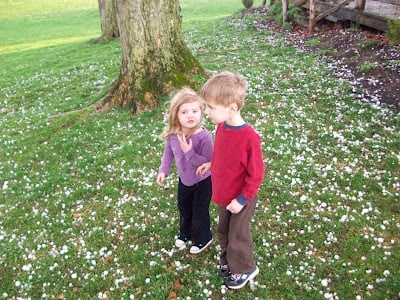
We had an amazing hail storm yesterday... like nothing I have ever seen! We even have little dents all over the hood of our car to prove it. Check out the beautiful fog in the background.
Mason was so excited, when he saw the hail littering the ground he asked, "Is that marshmallows?"

Isaac is spending more and more time on his cell phone these days. Getting calls from orchards that need pollination in the coming week. We didn't expect to move bees for pollination until mid-April, but here we are, mid-March, 5 weeks ahead of schedule. Isaac also has to call the land owners that allow us to use their farmland for our apiaries, to let them know he will be arriving in the middle of the night to pick up the hives and move them to the orchards.
We were lucky to host two of our 'regulars' from the North Market farmer's market, Shawn and Joanna, who wanted to come learn more about our bees. They graciously followed Isaac as he instructed them how to secure down the hives so they don't come apart as he transports them to the orchards. They had quite the bumpy, muddy ride, as most of our bee locations are in meadows and pasture land that isn't conducive to traversing in the early Spring, just after it rains.
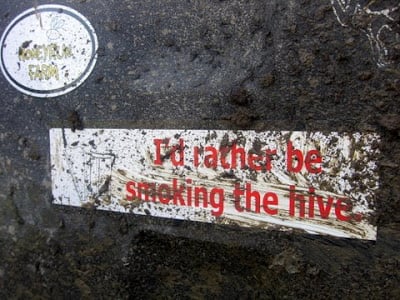
They snapped a few photos of the mud-covered trailer. For Valentine's Day, I splurged and got Isaac some beekeeping bumper stickers that I created online. In case you can't read through the mud, the top left one is a Honeyrun Farm sticker with our logo, and the bottom right reads, "I'd Rather Be Smoking the Hive" with a picture of a bee smoker.
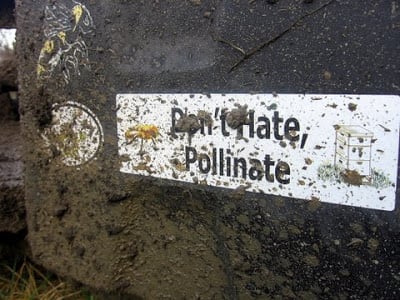
This one reads, "Don't Hate, Pollinate." I had my "facebook friends" help me come up with catchy beekeeping slogans.
Isaac spent all morning buying every ratchet-strap in the town of Circleville so he can keep the bees safe and secure while transporting hives. Then he spent all afternoon working the bees, checking for large hives that need split to discourage swarming (he reports they are healthy and strong, and already making honey!), and now he is spending his evening-and-in-to-the-morning hours moving hives to transport them for pollination. This beekeeping life can be a bit crazy and hectic in times like this, but the great thing about it is it ebbs and flows, and next week we can relax and know the bees are doing their job to help ensure a good apple harvest in Central Ohio.