Springtime at Honeyrun Farm
Honeyrun Farm
Well, it's definitely springtime in Ohio! Rain.. rain... and more rain... with a few beautiful days in between. Becky has planted a lot of root vegetables, lettuce, greens, and peas, and I have gotten some potatoes and onions in the ground. It is exciting to see the freshly tilled soil (weed free at the moment), and to think of the possibilities to come. Blackberries, raspberries, black raspberries, and asparagus will be planted within the next week (weather permitting). Although we won't be able to harvest any of those until next year, it gives us a lot to look forward to.
 Our 13 month old Mason has been keeping busy, helping out in the greenhouse and wandering into the nearby wheat field while I work on seeding and transplanting. His favorite chore is filling pots with soil, although he is not the most efficient worker as he prefers to do this one fistful at a time. In the greenhouse, we have onion transplants that are ready to be put out in the field... as soon as it gets dry enough to plant. This year we be selling a wide variety of potted plants from the greenhouse: heirloom tomatoes, culinary and medicinal herbs, perennials, annual bedding plants, hanging baskets, mixed herb planters, and even some "living" wreaths. We will be posting market dates and locations for April and May soon, and you are always welcome to stop by the farm and check out what is growing!
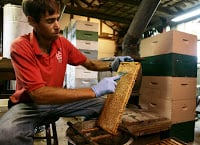
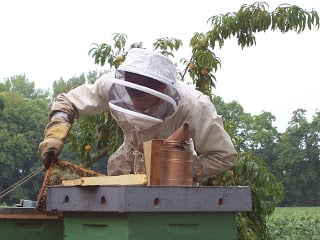
 I decided to include a picture of the bees, so they would not feel left out. We heard them out buzzing when the Willow trees were putting out pollen. It is an amazing sound to walk out of the house and hear thousands of honeybees going to work, gathering tiny little grains of pollen to carry back to the hive.. trip after trip... all day long. We all could learn a little about work ethic from watching the bees.
 On another note, we have some new Golden Buff chickens that are amazing layers! We are getting about 18 eggs a day, and have plenty to sell at the farmstand to our friends and neighbors. We will be getting 15 Plymouth Rock chickens at the beginning of the summer, and will be selling the eggs at the North Market on Saturdays. Here is a picture of the chicken coop that Isaac built last fall. He used the windows from his Grandmother Barnes' old brick house that was destroyed in a fire years back. I don't know of any other chickens who have it this nice... what a view.
 Our goats, Gilly and Honey are both pregnant and due in about 2 months. Honey, who has always looked pregnant, appears that she may be having twins or triplets. Gilly, who tries her best to compete with Honey for food, is actually putting on some weight and developing an udder. We cannot wait for the baby goats to arrive... I believe they are the cutest farm animal around. Here is a picture of Gilly from last fall. She's always looking for someone to pick on.
 Bottom Three Photo credits: Kenneth Lilly
Our 13 month old Mason has been keeping busy, helping out in the greenhouse and wandering into the nearby wheat field while I work on seeding and transplanting. His favorite chore is filling pots with soil, although he is not the most efficient worker as he prefers to do this one fistful at a time. In the greenhouse, we have onion transplants that are ready to be put out in the field... as soon as it gets dry enough to plant. This year we be selling a wide variety of potted plants from the greenhouse: heirloom tomatoes, culinary and medicinal herbs, perennials, annual bedding plants, hanging baskets, mixed herb planters, and even some "living" wreaths. We will be posting market dates and locations for April and May soon, and you are always welcome to stop by the farm and check out what is growing!I decided to include a picture of the bees, so they would not feel left out. We heard them out buzzing when the Willow trees were putting out pollen. It is an amazing sound to walk out of the house and hear thousands of honeybees going to work, gathering tiny little grains of pollen to carry back to the hive.. trip after trip... all day long. We all could learn a little about work ethic from watching the bees. On another note, we have some new Golden Buff chickens that are amazing layers! We are getting about 18 eggs a day, and have plenty to sell at the farmstand to our friends and neighbors. We will be getting 15 Plymouth Rock chickens at the beginning of the summer, and will be selling the eggs at the North Market on Saturdays. Here is a picture of the chicken coop that Isaac built last fall. He used the windows from his Grandmother Barnes' old brick house that was destroyed in a fire years back. I don't know of any other chickens who have it this nice... what a view.Our goats, Gilly and Honey are both pregnant and due in about 2 months. Honey, who has always looked pregnant, appears that she may be having twins or triplets. Gilly, who tries her best to compete with Honey for food, is actually putting on some weight and developing an udder. We cannot wait for the baby goats to arrive... I believe they are the cutest farm animal around. Here is a picture of Gilly from last fall. She's always looking for someone to pick on. Bottom Three Photo credits: Kenneth Lilly